

Why a Tweed City Coat Is a Smart Long-Term Investment
February 24, 2026
Why a Tweed City Coat Is a Long-Term Investment
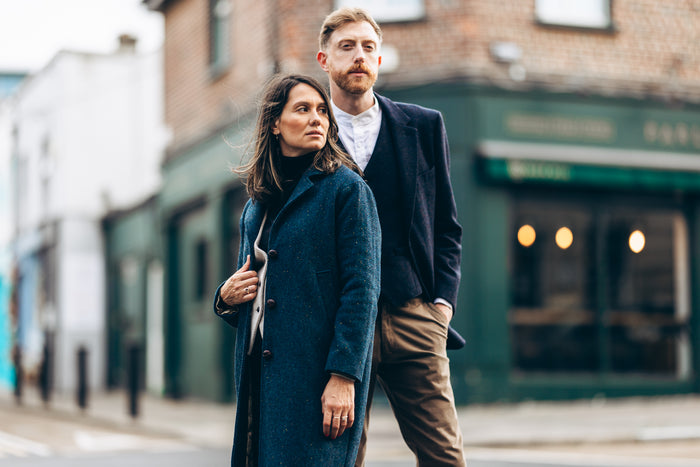
A tweed city coat becomes a long-term investment when it combines insulation, structural integrity, and professional versatility in one tweed coat. In cooler urban climates, it can serve across corporate settings, winter commuting, and formal occasions for many years. Its resilience depends on cloth weight, construction, proportion, and colour choice. When these are aligned, a tweed city coat does not date, it settles.
What Actually Makes a Coat an Investment
An investment clothing piece is not defined by price. It is defined by endurance. A city coat earns that description when it retains its shape through repeated wear, holds the shoulder line cleanly, and resists collapse at the collar and lapel. Wool tweed naturally traps air within its weave, providing insulation without relying on heavy padding or synthetic filling. It warms through structure rather than bulk. Construction is equally important. The front panels must remain balanced. The seams must support weight. The collar should sit decisively when raised against wind. In our tailoring rooms in Balbriggan, we approach city coats with this long view in mind. They are cut to maintain proportion beneath winter layering not to follow seasonal silhouettes. A coat that feels obsolete after two winters was never an investment. Longevity is the measure.
Tweed in the City: Professional, Not Provincial
There remains a misconception that tweed belongs only to rural settings. In reality, context is shaped by cut and colour rather than geography. A tweed city coat worn over a well-tailored suit reads structured and confident. Texture introduces depth without diminishing authority. In winter light against stone buildings, glass facades, and muted skies tweed feels grounded rather than decorative. In corporate environments, it performs particularly well in darker or restrained tones. Brown hopsack, muted hunting checks, and moss green offer subtle character while remaining disciplined. Over a three-piece suit, the coat should maintain clean lines through the shoulder and sleeve. Over knitwear and tailored trousers, it sharpens rather than softens the silhouette. The difference lies in proportion. Tweed becomes provincial only when styling loses restraint.
Choosing Colour for Long-Term Urban Wear
Colour is the quiet determinant of adaptability.A brown hopsack tweed coat offers texture without heaviness. Its open weave provides surface interest while remaining understated in tone. It integrates easily with navy, charcoal, and grey tailoring, making it particularly effective for daily professional wear. A brown hunting check introduces pattern with control. The check should feel grounded, not high contrast. In winter settings, it carries authority without overwhelming the clothing beneath. It is especially suited to structured daytime environments where depth is welcome. Moss green provides richness while remaining disciplined. Against navy suits or dark knitwear, it feels composed rather than expressive. The key is depth of shade, saturated enough to hold presence, muted enough to remain adaptable. Neutral depth almost always outlasts novelty.
Fit: The Foundation of Credibility
A tweed city coat must accommodate layering without distorting the line of the body. Shoulders should sit cleanly, neither extended nor collapsing inward. There must be sufficient room to layer over a suit jacket without pulling at the front closure. Sleeves should reveal a measured amount of shirt cuff when worn over tailoring. Length determines formality. A coat that falls between mid-thigh and just above the knee balances daily practicality with winter coverage. Too short, and it loses authority. Too long, and it risks becoming occasion-specific. Overly slim silhouettes often feel current but rarely last. Balanced proportion ages more convincingly. Investment is undermined by poor fit.
Wearing It Year After Year
Wool tweed responds well to time when treated properly. Brushing maintains the surface. Allowing the coat to rest between wears helps fibres recover. Storing it on a structured hanger preserves the shoulder line. With considered care, the cloth softens slightly without losing form. Unlike heavily padded technical coats, a tweed city coat does not rely on internal fill that compresses and degrades. Its warmth comes from the density and quality of the cloth itself. When responsibly made in Ireland with durable finishing, it is designed for repeated winter rotation rather than seasonal replacement.
Tweed City Coat vs a Standard Wool Overcoat
At first glance, a tweed city coat and a smooth wool overcoat serve the same purpose. Both provide warmth, structure, and winter coverage. The difference lies in surface character and long-term resilience. A smooth overcoat offers clean minimalism and works particularly well in highly formal corporate environments. Tweed, by contrast, introduces texture and depth. It softens sharp tailoring without undermining authority. In winter light, it absorbs rather than reflects, creating visual substance without sheen. From a durability perspective, tweed’s denser weave can prove more forgiving in daily wear. Minor marks and natural creasing tend to integrate into the surface rather than stand out. The coat develops familiarity rather than deterioration. The decision is less about hierarchy and more about personality and setting. In cities where winter dominates much of the year, tweed offers warmth and presence without resorting to bulk.
Beyond Trend-Driven Outerwear
Outerwear trends shift quickly exaggerated shoulders, extreme suppression, oversized silhouettes. These shapes rarely sustain relevance. A tweed city coat built on disciplined tailoring avoids that cycle. It neither chases minimalism nor nostalgia. It occupies a middle ground where structure, warmth, and proportion remain constant. In its first winter, it should feel assured. In its fifth, it should feel familiar. In its tenth, it should still feel appropriate. That is the difference between purchase and investment.