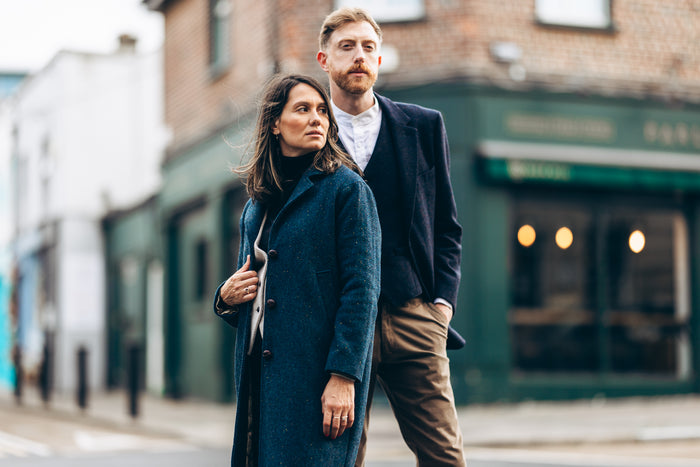


How an Irish Linen Jacket Should Really Fit
February 18, 2026
How an Irish Linen Jacket Should Really Fit: Structure, Balance, and Long-Term Wear
A linen jacket should fit cleanly at the shoulder, follow the natural line of the torso without strain, and allow movement without excess fabric. Because linen has very little elasticity, precision in cut matters more than looseness. When proportioned correctly, a linen jacket feels composed and breathable rather than oversized or casual.
The Shoulder Determines Everything
Fit begins at the shoulder. If the seam extends beyond the natural shoulder line, the jacket will appear collapsed. If it cuts short, the cloth will pull and distort. Linen, being lighter and less forgiving than wool, makes imbalance visible.In our tailoring rooms in Balbriggan, we treat shoulder alignment as foundational. Linen rewards accuracy. When the shoulder sits properly, the chest settles, the lapel rolls cleanly, and the back falls naturally. When it is incorrect, no amount of adjustment elsewhere will restore balance.
Linen Does Not Need Extra Volume
There is a persistent belief that summer jackets should be cut generously for airflow. In practice, this is rarely true. Linen breathes because of the fibre structure of flax, not because of additional fabric.An oversized linen jacket often creases unevenly and loses its shape quickly. Excess cloth creates movement where none is needed. A well-cut linen jacket allows ease through the chest and waist without surplus volume. The objective is clarity of line not tightness, not looseness. A clean silhouette will always look more considered than exaggerated drape.
Ease Through the Chest and Waist
Because linen has minimal stretch, the chest must allow natural movement without pulling at the fastening point. You should be able to sit comfortably without strain across the button.At the waist, shaping should be gentle rather than aggressive. Linen does not respond well to severe tapering. Over-suppression can create diagonal pulling and premature stress on seams.We cut our linen jackets with a measured balance and structured enough for professional environments, relaxed enough for movement and travel. The linen blazer should feel secure without feeling constrained.
Sleeve Length and Long-Term Balance
Sleeve length has a subtle but lasting impact on proportion. A linen jacket sleeve should finish at the wrist bone, allowing a modest reveal of shirt cuff. Linen softens over time, and sleeves cut too long at the outset will only appear longer with wear. Balance across the back is equally important. The jacket should lie smoothly between the shoulder blades without tension. Excess fabric at the back often indicates oversizing rather than comfort.Linen settles into its wearer gradually. When the proportions are correct from the beginning, the cloth ages with composure.
Structure: Supported, Not Stiff
Linen jackets vary in construction fully lined, half-lined, or lightly structured. The internal build should support the cloth without overpowering it.Over-structuring a linen jacket can introduce unnecessary rigidity. Under-structuring can cause the cloth to collapse and wrinkle unpredictably. The internal canvas must reinforce the front while allowing the fibre to move naturally. In lighter tailoring, restraint is discipline. The structure should stabilise the garment without competing with the fabric’s inherent character.
Creasing Is Not a Fit Issue
One of the most common misconceptions is that visible creasing indicates poor fit. In linen, this is rarely the case.Flax fibres lack elasticity, which means they hold the shape of movement rather than springing back immediately. Creasing is a characteristic of the fibre, not a flaw in tailoring.Sizing up to reduce creasing often leads to imbalance. It introduces unnecessary width and shortens the lifespan of the silhouette. Proper fit should prioritise proportion over crease avoidance.
Pure Linen and Linen Blends
Some jackets are made from pure linen, others from linen-cotton blends. Blends can soften the initial hand of the cloth and reduce visible wrinkling. Pure linen offers stronger breathability and more defined structure.The way a jacket fits will feel slightly different depending on fibre composition. Pure linen maintains sharper clarity through the shoulder and lapel. Blends may feel more forgiving initially.The choice should be guided by intention clarity and structural definition, or softness and ease. In both cases, proportion remains the determining factor.
Movement and Real-World Wear
A linen jacket should allow unrestricted movement through the day. You should be able to walk, sit, reach, and travel without constant adjustment. We design linen tailoring to move between settings city streets, professional spaces, travel environments, and more relaxed occasions. The fit must hold its line across contexts.A jacket that feels comfortable standing but strained when seated is not correctly proportioned. Linen, when cut thoughtfully, performs consistently across use.
Choosing With Intent
Selecting a linen jacket is less about seasonal trend and more about balance.Observe the shoulder first. Assess the chest for ease without excess. Check sleeve length in natural posture. Sit while buttoned to ensure comfort. Notice how the cloth falls at the back.Fit is not an afterthought in linen tailoring. It determines whether the linen sportscoat will feel refined or temporary. A correctly fitted linen jacket becomes dependable breathable in warmer months, adaptable across settings, and increasingly comfortable with wear.Linen lasts because it is structurally intelligent. When cut with precision and worn with understanding, it offers clarity without weight and ease without compromise.
Our Top Pick Irish Linen Jackets
A carefully selected edit of Irish linen jackets chosen for their clarity of cut, breathable construction, and long-term wearability. Each piece balances structure with ease, offering warm-weather refinement without sacrificing tailored integrity.
Irish Seafoam Linen Blazer & Jacket
Crafted in breathable Irish linen, the Seafoam blazer introduces a lighter, fresher tone ideal for spring and summer dressing. It retains a clean silhouette while feeling natural and unforced in movement, making it adaptable across both professional and relaxed settings.
Irish Linen Desert Jacket & Blazer
The Desert linen jacket pairs warm, understated tones with disciplined tailoring. Its balanced construction makes it practical for travel, comfortable in city environments, and appropriate for more informal summer occasions without losing composure.
Irish Linen Caramel Jacket & Blazer
In a deeper caramel hue, this linen blazer brings subtle richness to warm-weather tailoring. Lightweight yet structured, it offers breathability alongside a more refined presence, transitioning easily from daytime wear to evening settings.
Navy Irish Linen Blazer & Jacket
A navy Irish linen jacket delivers versatility with quiet authority. Combining traditional tailoring principles with the natural strength and breathability of linen, it provides structure that remains comfortable through extended wear.