










Lady Gregory: Inspiration Behind Celtic Tweed Women’s Tweed Waistcoats
March 05, 2026
Introduction
Among the most influential cultural figures in Irish history is Lady Gregory, a writer, patron of the arts, and central figure in Ireland’s literary revival at the turn of the twentieth century. Known for her role in establishing the Irish Literary Theatre and later the Abbey Theatre, Lady Gregory helped bring Irish stories, folklore, and national identity to international audiences. Her work represented a quiet but determined belief in the power of culture to shape national identity. At Celtic Tweed, historical figures who championed Irish creativity often inspire our designs. The Gregory Waistcoat draws from this legacy, reflecting elegance, individuality, and a connection to Irish heritage through thoughtful tailoring and craftsmanship.
The Historian Behind the Inspiration
Lady Gregory remains one of the most important patrons of Irish literature and theatre. Born into the Anglo Irish landed class in the nineteenth century, she later became a leading supporter of Ireland’s cultural revival movement. Working alongside writers such as W. B. Yeats and Edward Martyn, she helped establish institutions that gave Irish literature and drama an international platform. At Celtic Tweed we often look to individuals whose lives reflect creativity and cultural leadership, and Lady Gregory’s influence represents both. The Gregory Waistcoat Collection reflects a spirit of refinement and independence inspired by her commitment to Irish identity and storytelling.
Who Was Lady Gregory?
Lady Augusta Gregory was born Augusta Persse on 15 March 1852 at Roxborough House in County Galway, Ireland. After marrying Sir William Gregory in 1880 she became Lady Gregory and later settled at Coole Park, her estate near Gort. Coole Park became a gathering place for writers and artists during the Irish Literary Revival, attracting figures including W. B. Yeats and George Bernard Shaw. Gregory played a major role in the founding of the Irish Literary Theatre in 1899 and later the Abbey Theatre in Dublin in 1904. As both a playwright and folklorist she contributed numerous works that drew inspiration from Irish mythology and rural storytelling traditions. Her dedication to Irish culture helped preserve traditional stories while also encouraging a new generation of writers and dramatists.
Why Her Legacy Still Matters
Lady Gregory’s legacy remains deeply connected to the cultural identity of modern Ireland. Through her work in literature, theatre, and folklore she helped preserve important elements of Irish storytelling while also supporting emerging writers. Her collaboration with W. B. Yeats and others played a crucial role in establishing the Abbey Theatre as Ireland’s national theatre. Gregory believed that Ireland’s cultural heritage deserved recognition on the international stage, and she worked tirelessly to promote Irish voices and stories. Today her influence can still be seen in Irish literature, theatre, and the broader cultural appreciation of Ireland’s folklore and traditions.
Clothing and Style of the Era
During the late nineteenth and early twentieth centuries clothing reflected both practicality and social refinement. Tailored waistcoats were widely worn as part of layered outfits that balanced warmth with structure. Wool fabrics such as tweed became particularly popular in Ireland because they offered comfort and practicality while also reflecting local textile traditions. Waistcoats provided a versatile layer that could be worn in both formal and relaxed settings, allowing individuals to express personal style while maintaining a polished appearance. These traditions of thoughtful tailoring continue to influence Irish clothing design today.
How This Inspired Celtic Tweed
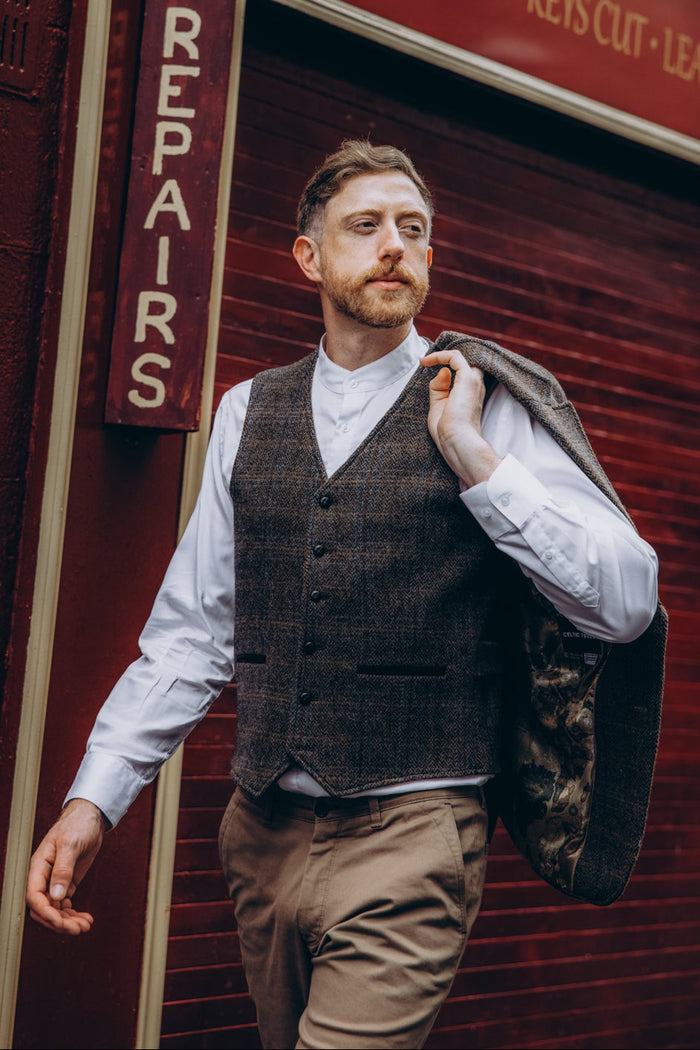
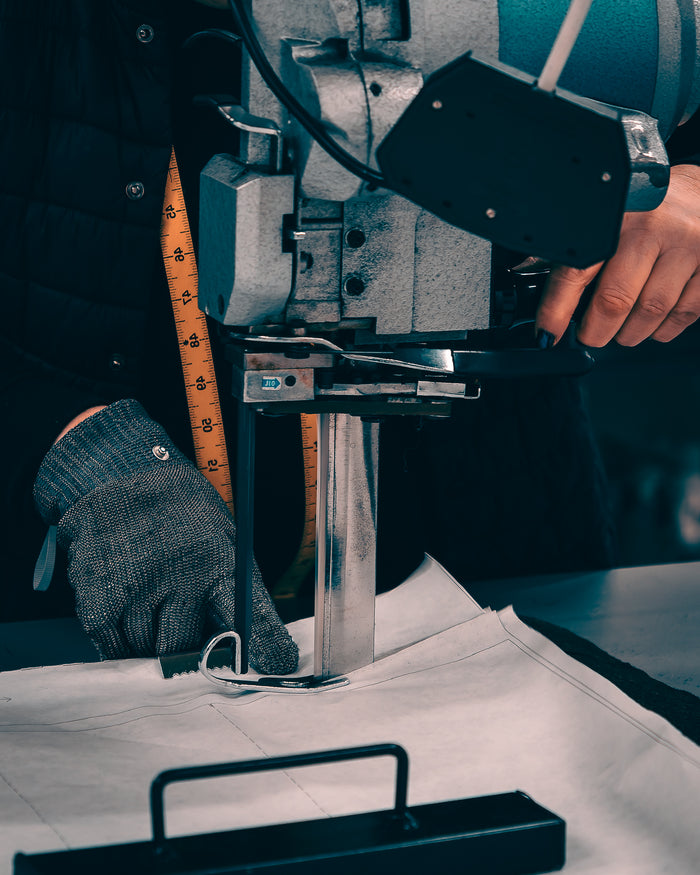
The Gregory Waistcoat reflects the elegance and individuality associated with Lady Gregory’s legacy. Designed, cut, and sustainably handmade in Balbriggan, the waistcoat combines heritage tweed with a flattering silhouette that can be styled in multiple ways. The design balances traditional tailoring with contemporary versatility so that the piece feels equally comfortable paired with denim for relaxed wear or layered with tailored pieces for a more refined look. Rather than replicating historical clothing directly, the Gregory Waistcoat interprets the spirit of Irish cultural heritage through modern design and craftsmanship.
Irish Craftsmanship Today
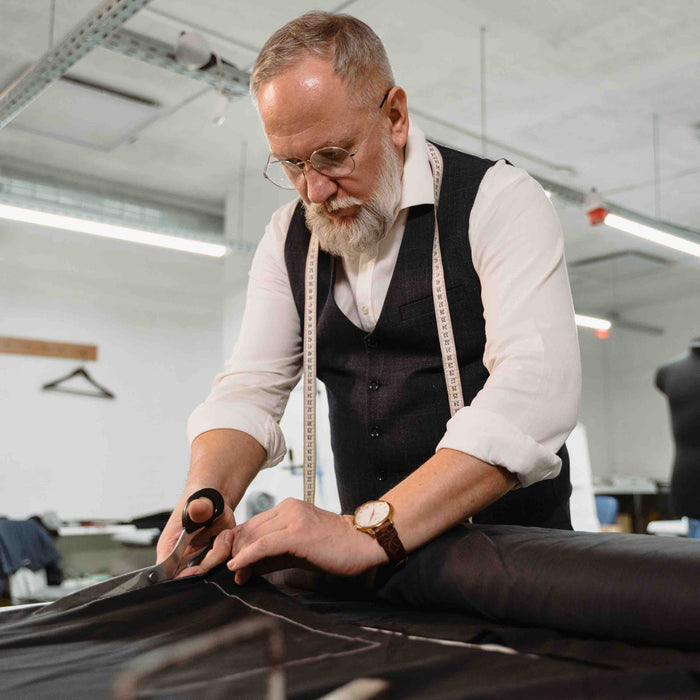
Irish tailoring traditions remain central to Celtic Tweed’s approach to design. By working with natural fabrics and skilled makers, the brand continues a long heritage of textile craftsmanship associated with Ireland. The Gregory Waistcoat reflects this tradition through careful attention to fit, fabric selection, and thoughtful construction. Designed in Dublin and handmade in Balbriggan, the piece demonstrates how Irish craftsmanship continues to evolve while remaining rooted in heritage.
Styling the Look Today
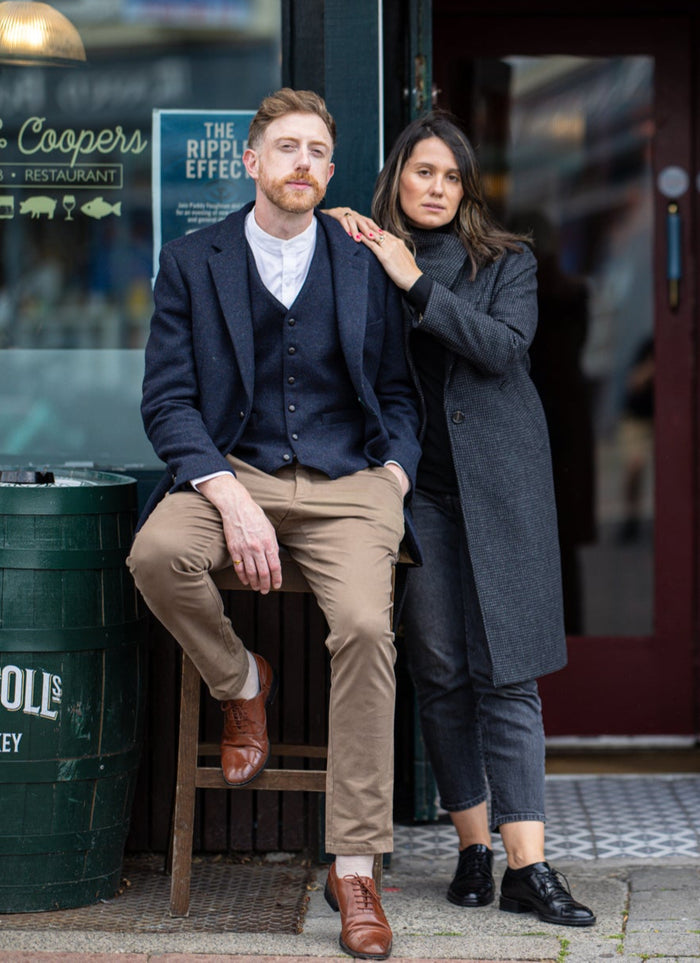
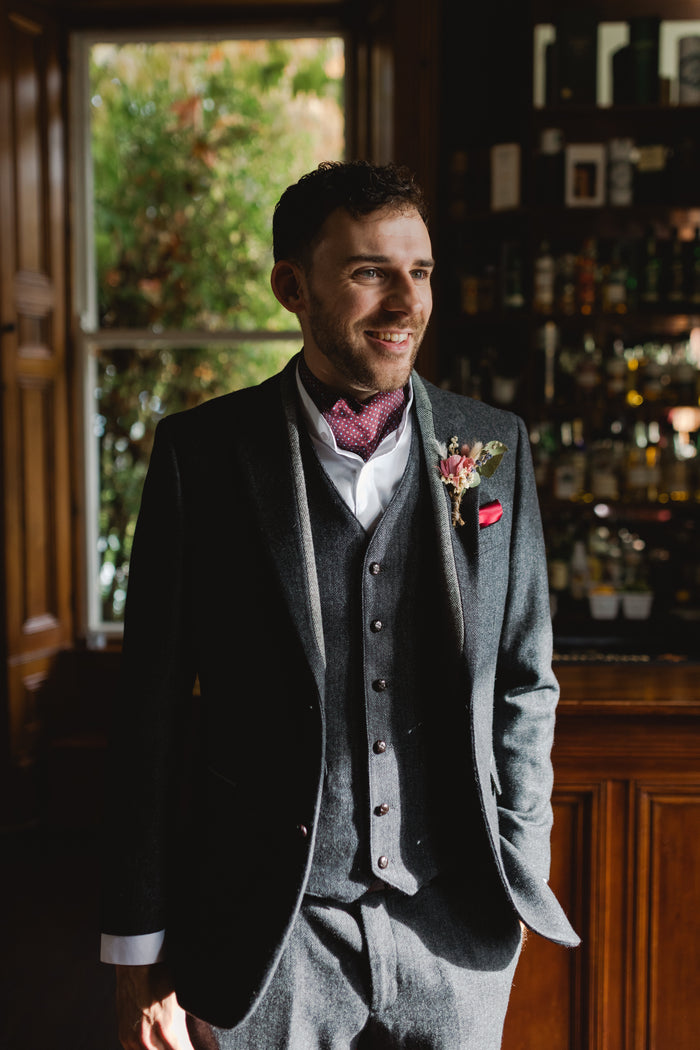
A tweed waistcoat offers remarkable versatility in a modern wardrobe. It can be worn casually over a shirt with jeans or layered with tailored pieces for a more structured outfit. The textured character of tweed adds depth and individuality while maintaining a sense of refinement. Pieces such as the Gregory Waistcoat move easily between countryside settings and city life, reflecting the same balance of practicality and elegance that has long defined Irish clothing traditions.
The Historical Inspiration Behind Celtic Tweed Designs
Celtic Tweed collections often draw inspiration from individuals who shaped Irish cultural and creative history. Writers, explorers, political leaders, and cultural patrons all contribute to a broader narrative that informs the brand’s design philosophy. By exploring these stories Celtic Tweed connects heritage inspiration with contemporary tailoring, allowing each collection to carry meaning beyond aesthetics.
History as a Source of Design Inspiration
Across Celtic Tweed collections history provides a rich source of ideas and influences. By examining the traditions, materials, and cultural context of different eras, heritage fabrics such as tweed continue to inspire clothing suited to modern life. The Gregory Waistcoat reflects this philosophy by drawing inspiration from Lady Gregory’s cultural legacy while presenting a piece designed for contemporary wardrobes.
Conclusion
Lady Gregory’s influence on Irish culture remains profound because she believed strongly in the importance of storytelling, creativity, and national identity. Her work helped establish institutions that continue to shape Irish literature and theatre today. Inspired by this spirit of cultural leadership, the Gregory Waistcoat celebrates Irish heritage through thoughtful tailoring and craftsmanship. Designed and handmade in Balbriggan, it reflects the enduring relationship between Irish history, creativity, and modern design.