










Pádraig Pearse and the Green Herringbone Tweed Jacket & Waistcoat
March 18, 2026
Introduction
Pádraig Pearse is remembered as one of the most significant figures in modern Irish history, a man whose life bridged education, literature and political change. His legacy is closely tied to identity, language and the idea of national expression. Pearse believed deeply in culture as a foundation for independence, and his work continues to shape how Ireland understands its past. Heritage tailoring often reflects more than style alone. It carries meaning, place and memory. The green herringbone jacket and the green herringbone waistcoat with revere from Celtic Tweed draw on this sense of identity, combining colour, structure and craftsmanship in a design that feels both rooted and relevant.
Who Was Pádraig Pearse?
Pádraig Pearse was an Irish teacher, barrister, writer and political activist who lived from 1879 to 1916. Born in Dublin, he became a leading figure in the cultural revival of the early twentieth century, promoting the Irish language and founding St Enda’s School in 1908. Pearse later played a central role in the Easter Rising of 1916 and was one of the signatories of the Proclamation of the Irish Republic. Following the Rising, he was executed by the British authorities, an event that contributed significantly to the growth of support for Irish independence.
The Story Behind the Inspiration
Pearse’s influence extended beyond politics into education and literature, where he sought to create a distinctly Irish identity rooted in language, storytelling and tradition. Through his school, St Enda’s, he promoted a vision of education that connected students to Irish heritage and culture. His writings, including poetry and essays, reflected both idealism and a strong sense of national identity. The events of 1916 placed him at the centre of a defining moment in Irish history, and his execution transformed him into a symbolic figure in the story of independence. His legacy remains closely linked to cultural expression, leadership and the shaping of national identity.
Clothing and Style of the Era
In the early twentieth century, clothing reflected both practicality and social identity, particularly during a time of political and cultural change. Men commonly wore structured jackets and waistcoats made from wool fabrics suited to the Irish climate. Herringbone patterns were part of a long tradition of woven designs that added texture and subtle detail to everyday clothing. Colours often drew from natural surroundings, with greens, browns and greys appearing frequently. The combination of jacket and waistcoat created a composed and structured appearance that balanced function with a sense of personal presentation.
How This Inspired the Celtic Tweed Pearse Jacket and Waistcoat
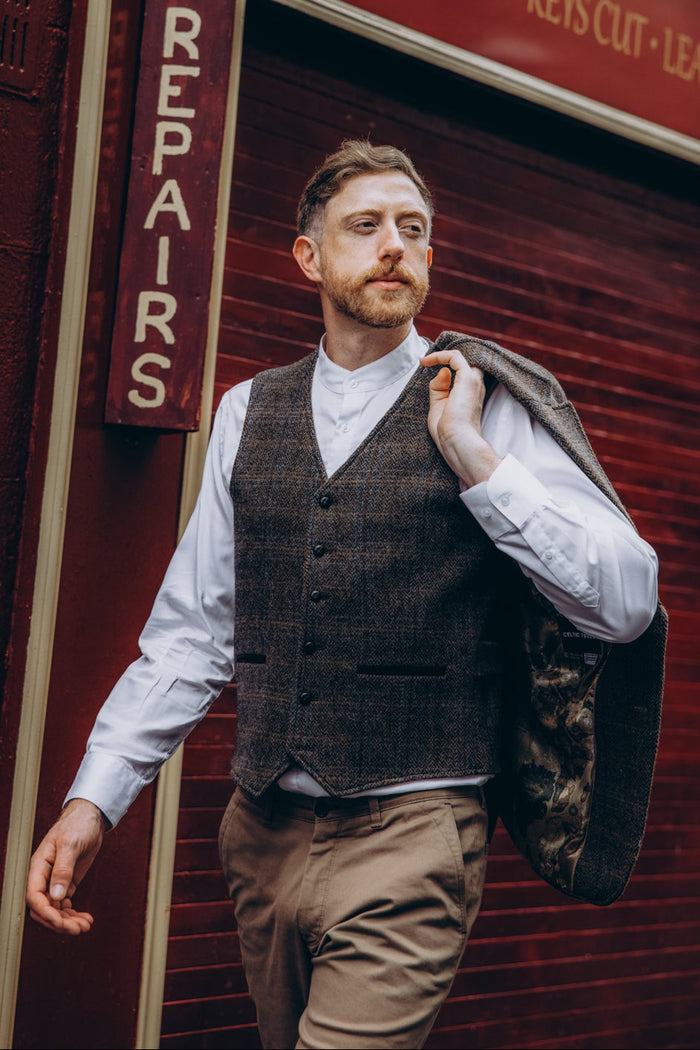
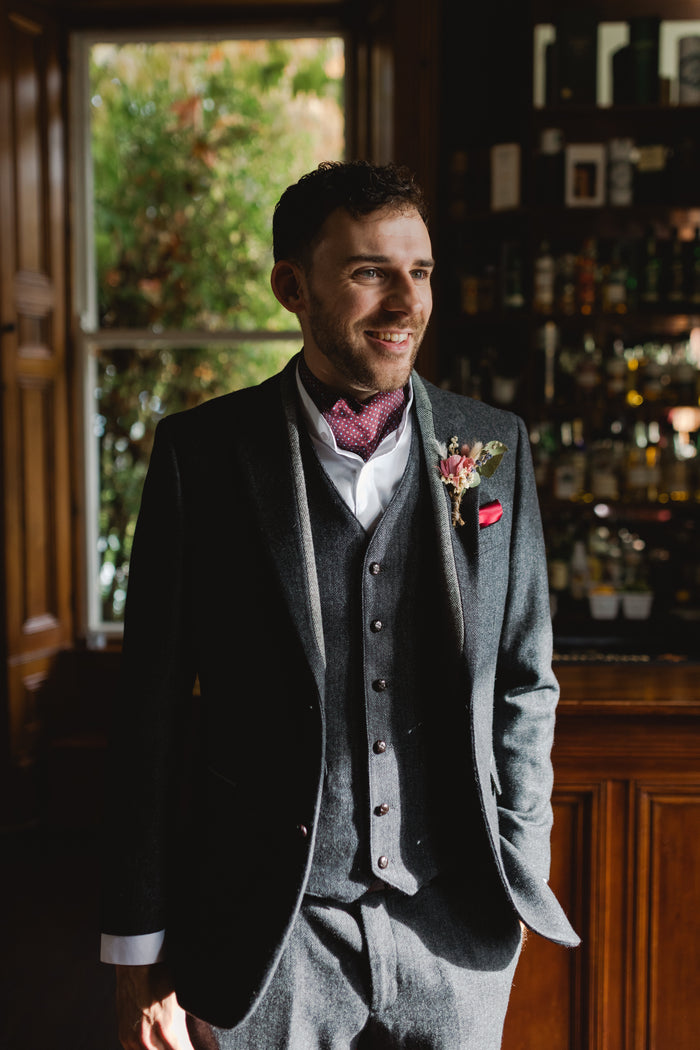
The green herringbone tweed jacket and the green herringbone waistcoat with revere reflect the connection between identity, landscape and heritage associated with Pearse’s life and legacy. The rich green tone draws inspiration from the Irish landscape and the cultural symbolism often linked to national identity. The jacket features contrast grey tweed on the collar and revere, with a contrasting under collar that adds depth and detail. A three button front, darted shaping and working four button cuffs create a structured fit, while heritage flap pockets and a centre back vent with contrast trim reflect traditional tailoring elements. Keyhole buttonholes on the revere and three interior pockets complete the design. The waistcoat with revere complements the jacket, offering a layered look that echoes classic tailoring traditions. Each piece is designed, cut and sustainably handmade in Balbriggan, Co Dublin, connecting historical inspiration with contemporary craftsmanship.
Irish Craftsmanship Today
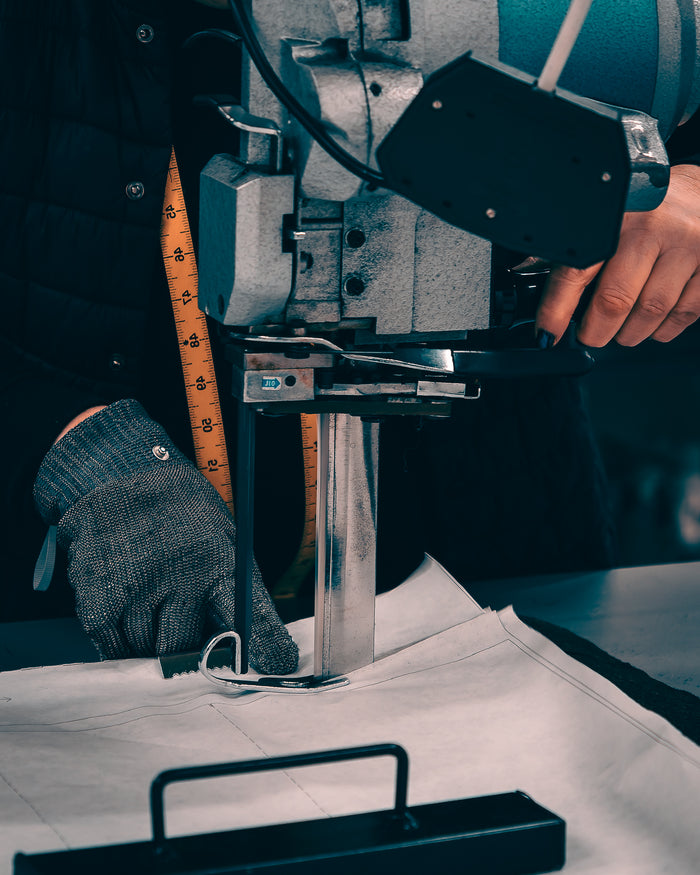
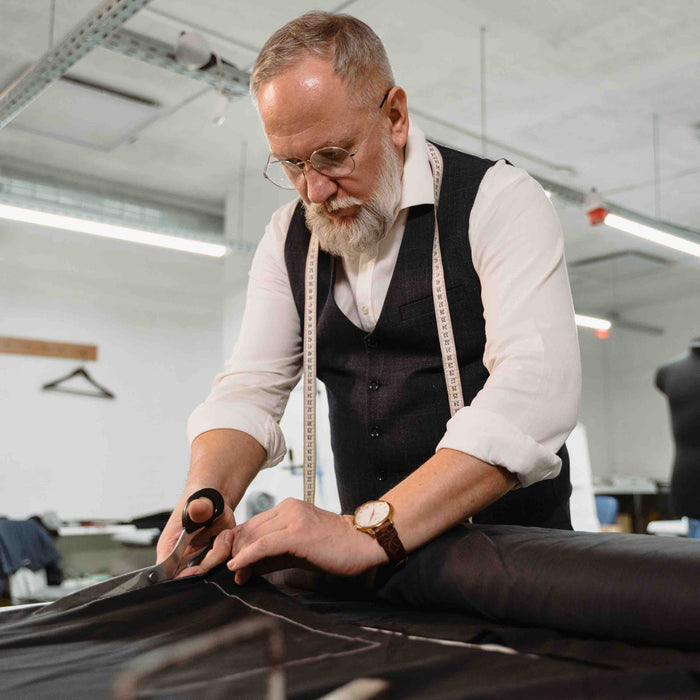
Celtic Tweed continues a long tradition of tailoring rooted in Irish craftsmanship. Balbriggan has a history of textile production that spans generations, contributing to Ireland’s reputation for skilled makers and clothing production. Today the brand builds on that heritage through designs that respect traditional techniques while responding to modern needs. Attention to fabric, structure and finishing ensures that each piece reflects careful workmanship. By producing locally in Ireland, Celtic Tweed supports a living tradition of craftsmanship that continues to evolve.
How to Wear It Today
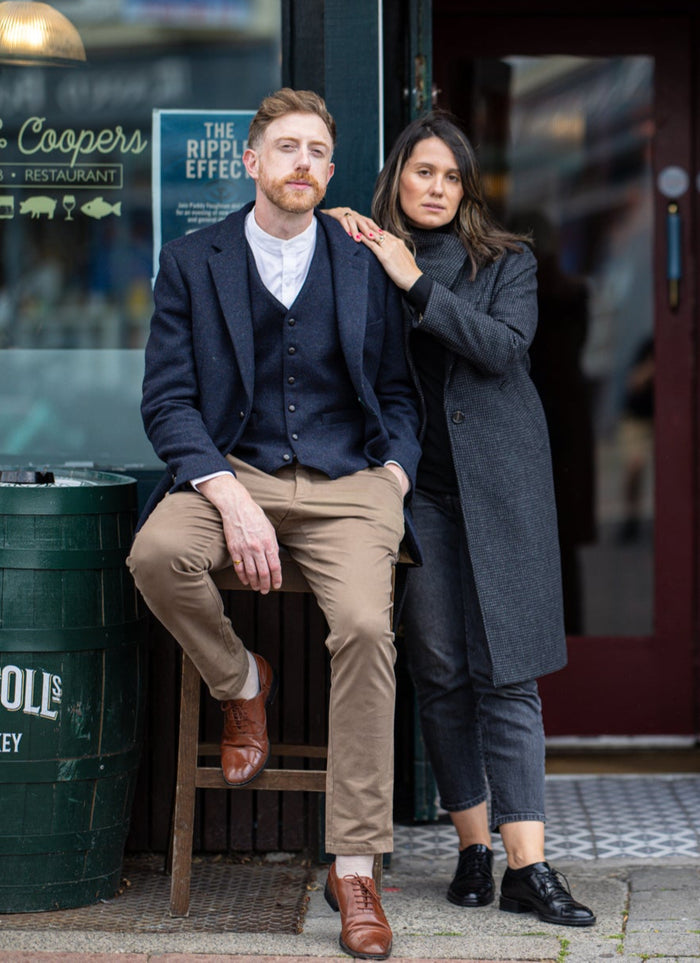
The green herringbone jacket and the green herringbone waistcoat with revere offer a versatile combination suited to both countryside and city settings. In rural environments the green tone complements natural surroundings, making it ideal for outdoor gatherings or seasonal events. In a city setting the same combination creates a refined and distinctive appearance when paired with crisp shirts and tailored trousers. The jacket can be worn on its own for a more relaxed look, while the waistcoat adds structure and formality when layered. Together they offer flexibility while maintaining a strong sense of heritage inspired style.
Conclusion
Pádraig Pearse’s legacy continues to shape how Ireland understands culture, identity and history. His life reflects a belief in the power of language, education and national expression. The green herringbone jacket and the green herringbone waistcoat with revere from Celtic Tweed draw on this connection, bringing together heritage, craftsmanship and modern design. In doing so they offer a way to carry elements of the past into the present through thoughtful and considered tailoring.