










Tweed Snoods vs Scarves: Why Are Men Making the Switch?
March 03, 2026
Why More Men Are Choosing Tweed Snoods Over Scarves
The tweed snood has re-emerged in modern menswear not as a trend, but as a solution. Unlike a traditional scarf, it provides contained warmth, cleaner lines, and better integration with structured outerwear. For men who value proportion and practicality, the tweed snood offers insulation without excess fabric or constant adjustment.
A Practical Origin, Not a Fashion Statement
The snood was never designed to decorate. It was designed to work. Its closed construction meant it would not unravel in wind or interfere with movement. It stayed in place. It held warmth at the throat. It did not require constant attention. That practicality remains its greatest strength. In colder months, particularly in city environments where coats are structured and tailored, the traditional long scarf can feel cumbersome. It hangs loose, shifts position, and often disrupts the clean line of a lapel. A snood eliminates that problem. It sits close. It stays put. It looks intentional.
Why It Works Better with Tailoring
Tailored coats and jackets rely on clarity of line. A heavy scarf wrapped repeatedly around the neck can distort the collar or overwhelm the chest. A snood, worn once or doubled depending on weight, frames the neckline without altering the silhouette. This is particularly effective with structured city coats, tweed jackets, and aviator styles. The accessory remains contained within the collar rather than spilling over it. In corporate environments, this containment matters. It keeps the look composed. The difference is subtle but visible.
Tweed Makes the Difference
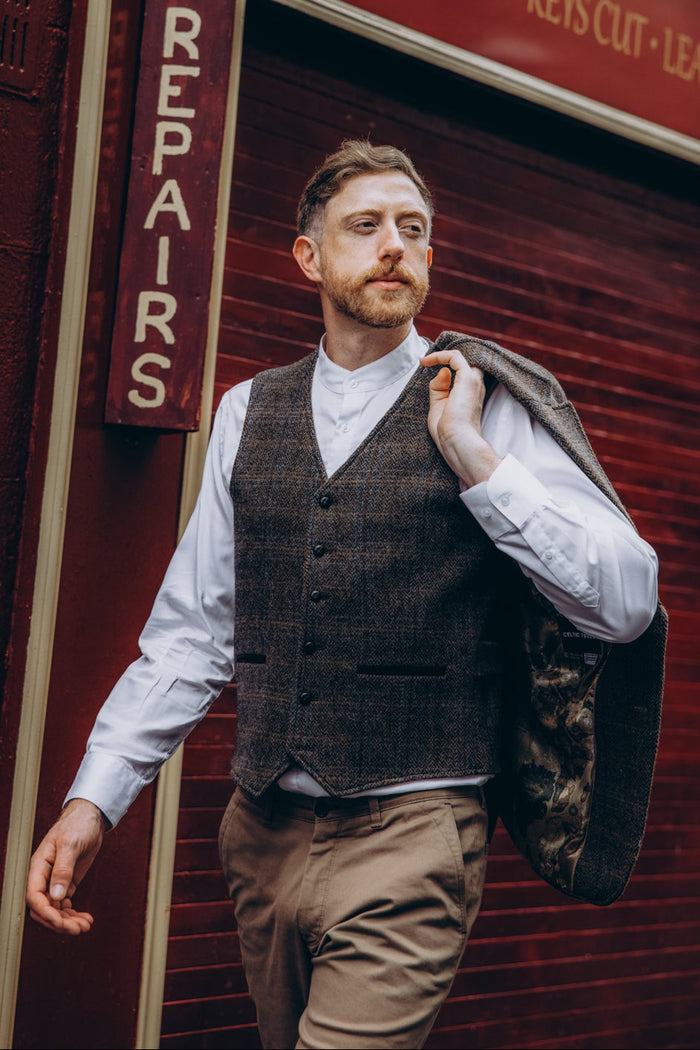
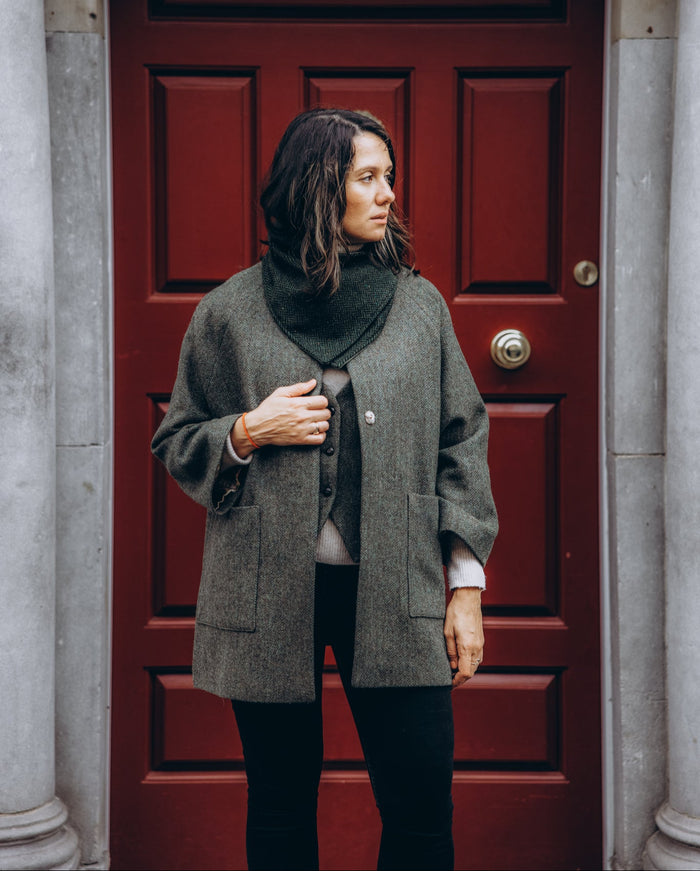
Fabric choice determines whether a snood feels athletic or refined. Tweed introduces texture and depth. It traps warmth naturally while maintaining breathability. It holds shape without stiffness. Under winter light, it absorbs rather than reflects, creating a grounded effect. Each weave carries its own character. A brown hopsack snood offers subtle openness in its basket weave, pairing naturally with navy and charcoal coats. A blue herringbone snood introduces directional movement across the surface, particularly effective against grey or camel outerwear. Moss herringbone provides richness without brightness, integrating easily with darker winter tailoring. Green herringbone reflects landscape tones while remaining controlled and understated. Navy twill delivers diagonal structure, ideal for more corporate settings where restraint is essential. The cloth elevates the accessory from casual to considered.
How to Wear a Tweed Snood Well
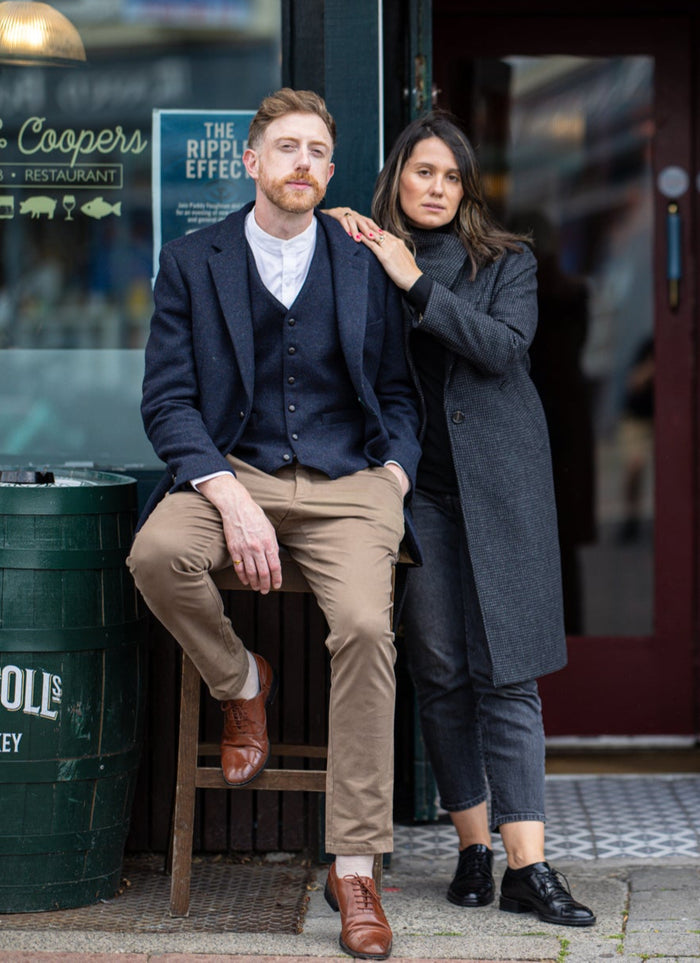
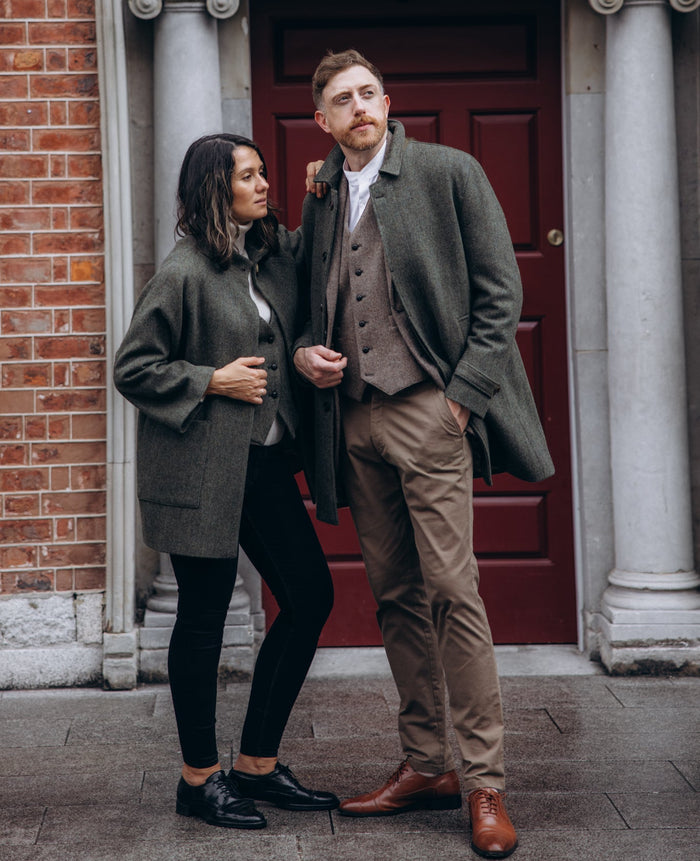
The key is proportion. With a tailored overcoat, allow the snood to sit just inside the collar. It should not overwhelm the lapel or rise too high on the neck. The objective is insulation without feeling heavy. With a tweed jacket, particularly in transitional weather, the snood can sit slightly closer to the throat. It provides warmth without requiring an additional layer. For aviator or more relaxed outerwear, a single loop is often enough. The silhouette remains clean and functional. Colour pairing should be deliberate but not identical. A navy coat works well with brown hopsack or moss herringbone. Grey outerwear integrates naturally with blue herringbone. Brown coats balance effectively with navy twill. Avoid matching too precisely. Contrast creates depth.
Corporate and Winter Events
In professional settings, accessories must remain disciplined. A navy twill or blue herringbone snood complements darker business coats without disrupting structure. It adds insulation during commutes and outdoor intervals while preserving boardroom composure. For race meetings or winter gatherings, green and moss herringbone introduce character without slipping into novelty. Texture carries more authority than brightness. The snood is particularly suited to environments where wind and cold are present but formality still applies. It performs quietly.
Why It Feels Modern Again
Menswear continues to favour restraint over excess. Pieces that solve a practical problem without drawing attention to themselves have renewed relevance. The tweed snood fits this shift precisely. It is contained. Structured. Functional. Super Cosy with its velvet back. It supports the coat rather than competing with it. Designed and constructed with the same care as outer garments, a tweed snood becomes part of a considered winter wardrobe rather than an afterthought. It does not ask to be noticed. It simply works.